By Andrew W.
Socialism is for everyone, and education provides power to the people. That’s why every issue of Garden State Socialist features this column, Socialist Stories: a short, educational piece about socialism, its history, and the people who have championed it.

American culture often portrays socialism as government ownership of everything. But this confuses the state with society. Socialists do not oppose personal ownership; they oppose a system in which private owners, under state protection and with state subsidies, profit from other people’s labor and control the resources society depends on.
The state is a political unit that has governing sovereignty over the population of a territory. But when we think of the state, we often think of a nation or country, the bureaucracy, or the explicitly armed and violent arms (police and military).
Early Forms of the State
Tribal and clan-based systems were the earliest state forms. The city-state (polis) flourished in ancient Mesopotamia and Greece. Some city-states, like Athens, practiced direct democracy among citizens, excluding their large slave populations.
There have been theocratic states, monarchies, tributary colonial states, and the modern nation-state. The Europeans who pioneered the nation-state form also pioneered modern imperialism, imposing state lines over territories filled with different national identities, languages, and cultures. Think the Middle East. Africa. Anywhere arbitrarily straight lines are glaring on the map.
Socialist Views May Vary
So what is a socialist view of the state? This matters because most people first encounter the Democratic Socialists of America through its election campaigns, its legislators, and, more recently, New York City Mayor Zohran Mamdani’s government.
A singular socialist view of the state is inconceivable, given the diverging tendencies of socialism. For a Marxist view, we can return to Karl Marx himself.
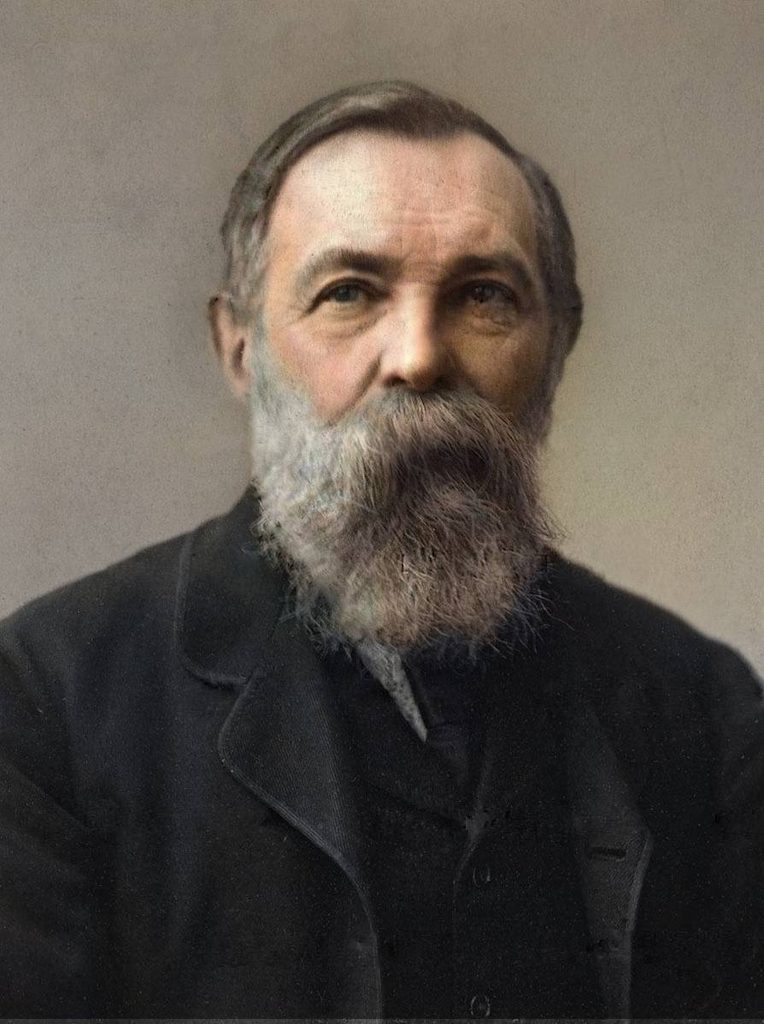
In the 1847-48 “Manifesto of the Communist Party,” Marx and Friedrich Engels argued that “the executive of the modern state is but a committee for managing the common affairs of the whole bourgeoisie.” The propertied capitalist class controls the modern state, using its wealth to influence politicians, voters, institutions, and other entities that form democratic governments.
Marx and Engels proposed that workers’ political supremacy would “wrest, by degree, all capital from the bourgeoisie” and centralize production under the proletariat. Their transition plan included abolishing landlords and inherited estates, progressive taxation, nationalizing banking and transportation, abolishing child labor, and free education for all children. By the 20th century, many states had adopted parts of this program, including social democracies and even the United States.
In “Eighteenth Brumaire of Louis Bonaparte” (1851), Marx asserted that the state could gain independence from competing ruling classes while still protecting capitalism. After the Paris Commune of 1871, he argued in “The Civil War in France” that “the working class cannot simply lay hold of the ready-made state machinery, and wield it for its own purposes.” The state was a bureaucratic and military machine built around existing class power. Workers needed to replace it with radically democratic institutions.
“Two Great Gangs of Political Speculators”
In an 1891 preface to “The Civil War in France,” Friedrich Engels described American politics as controlled by “two great gangs of political speculators” who exploit the state while the nation remains powerless. His analysis sounds familiar in our era of a two-party system marked by low voter turnout. Donald Trump represents this political era but did not create it. Elon Musk, Miriam Adelson, and billionaire cabinet members illustrate the connections between capital and government, which extend across both Republican and Democratic administrations.
Greek theorist Nico Poulantzas, in “State, Power, Socialism” (1978), described the state as a terrain of class struggle, where concessions and bold reforms could be won. Salvador Allende’s 1970 election in Chile offered hope for a democratic transition to socialism, as did Eurocommunism in Europe, where communist parties sometimes allied with center-left parties in parliament in order to form governing majorities. But General Augusto Pinochet overthrew Allende with U.S. backing, while European communist parties were co-opted and defeated. In 2015, a Greek party inspired by Poulantzas, SYRIZA, came to power democratically but then abandoned much of its social program under pressure from European financial powers, accepting austerity.
American perspectives on the modern state under capitalism
American political scientist Michael Parenti argued in “Democracy for the Few” (1974) that U.S. democracy serves the ruling class. Its history includes protections for private property and profit, racist enslavement and disenfranchisement, and two political parties representing competing ruling-class factions. His views echo Engels a century earlier.
Assata Shakur, a Marxist and member of the Black Liberation Army, described the state as a vehicle of repression stretching from schools to the military and police. She argued for revolutionary and internationalist approaches to the state. Her conflict with the state ultimately led to permanent exile in Cuba, where she died in 2025.
In the modern state, corruption is normalized. Capitalists want governments that weaken regulations and enforcement while reducing social services and public goods. The popular masses desire popular sovereignty but rarely achieve it. Ruling classes curb revolutionary fervor through wages, living costs, police and legal power, military intervention overseas, and spectacles of media, technology, and sports that keep the masses politically passive.
This is the world of the state that the DSA is attempting to operate in. Let’s talk about it.
Thank you for reading

Garden State Socialist is a publication of the North New Jersey chapter of the Democratic Socialists of America (NNJ DSA).
DSA is the largest socialist organization in the United States, with over 100,000 members and chapters in all 50 states. We believe that working people should run both the economy and society democratically to meet human needs, not to make profits for a few.
We are a political and activist organization, not a party; our members use a variety of tactics, from legislative to direct action, to fight for reforms that empower working people.
Join us! dsausa.org/join
Learn more about NNJ DSA
Take action at our upcoming events